SIM RACING IS ALL ABOUT BABY STEPS
Here’s my trajectory in this hobby, with a few tips spread throughout to help guide your thinking
But if you can’t be bothered and just want to see what my setup looks like…

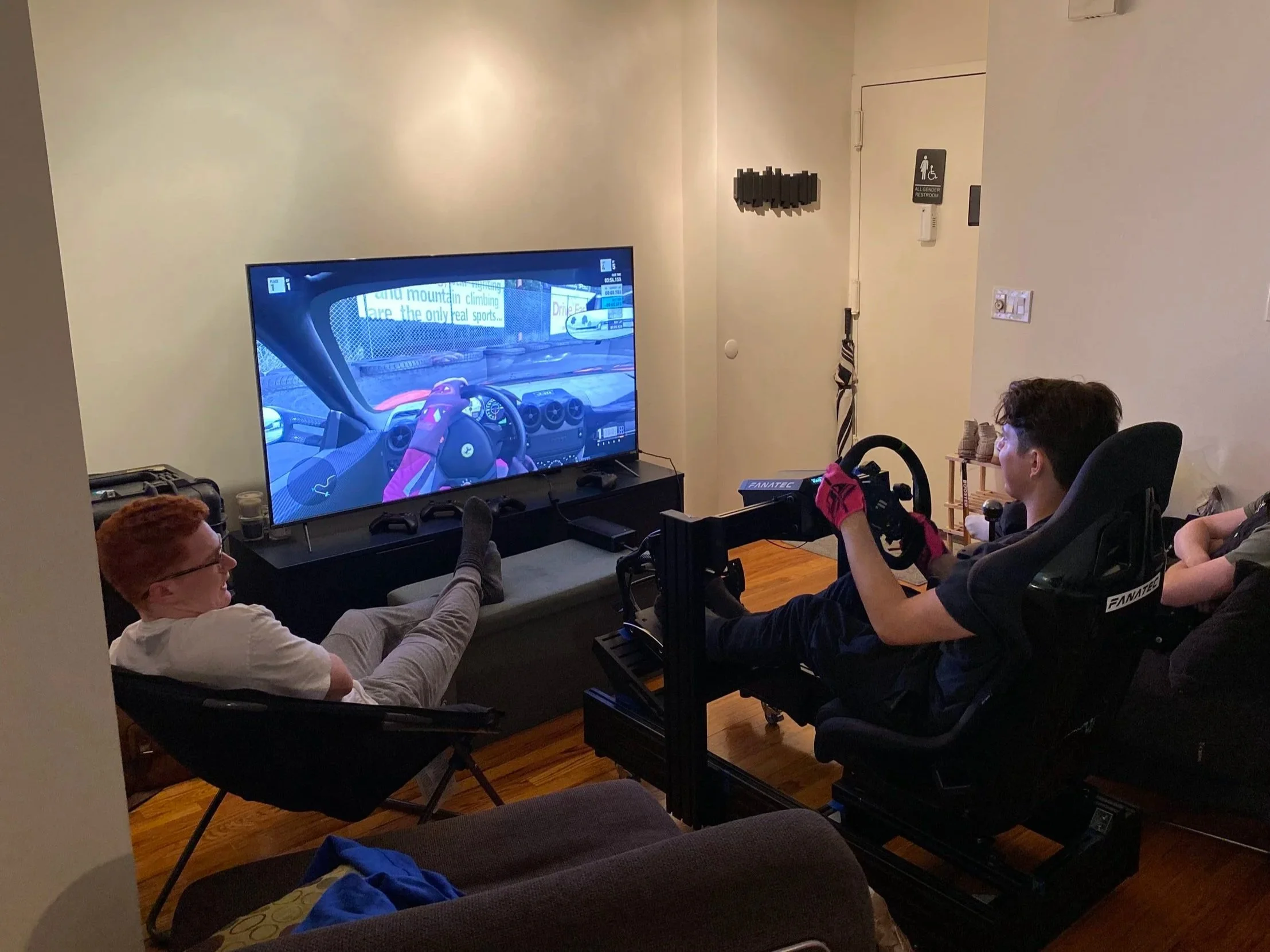
If what shenanigans are
all you want to get up to,
then maybe don’t spend thousands of dollars on a sim rig.
Stick to a good couch, the console of your choosing, and some friends
LESSON #1
UNDERSTAND WHAT YOUR PRIORITIES ARE
A sim racing setup is best built when you have an idea of what you’re looking for in a setup.
Here are some questions to ask yourself about where you want to take the hobby
-
Understanding what kind of vehicles you want to spend your time driving is critical to how you select components
-
For better or for worse, the system you run your sim rig on will put you on very specific trajectories for components and accessories. Be mindful of this as you plan.
-
The three most important factors for getting a sim rig off to the races (pun intended)
Something you hear all the time:
“Aww man I want to get into sim racing so bad.” So do it, fool!
LESSON #2
yoU GOTTA START SOMEWHERE
The first step to get into sim racing is to start simple, and small
(unless you’re a baller, or an idiot)
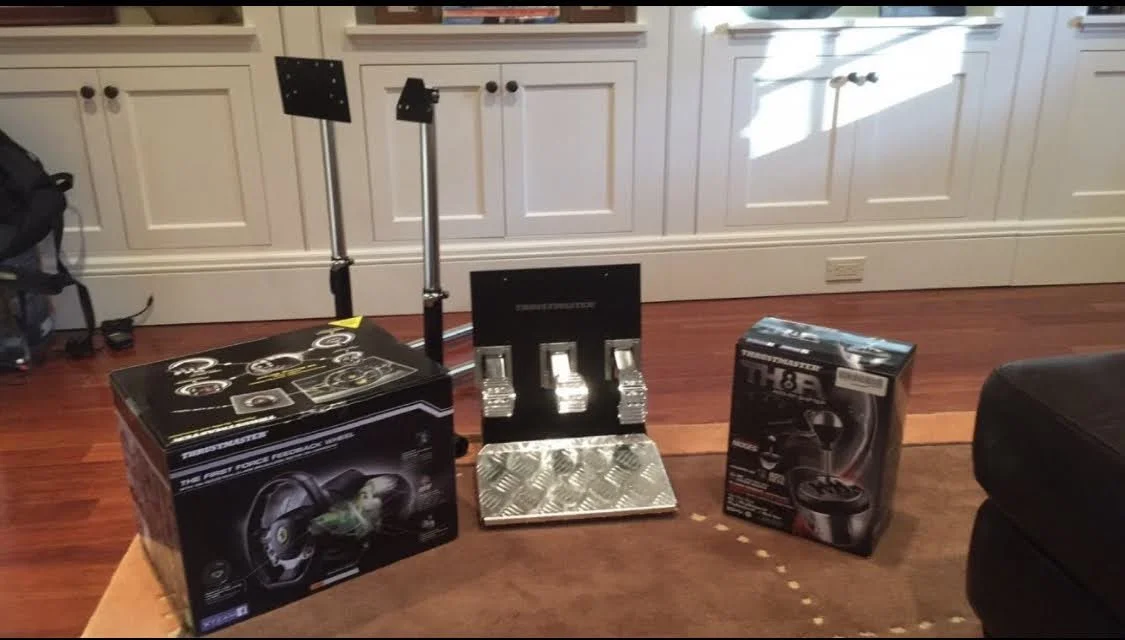
Photo of my first "real” sim racing setup with force feedback. As you can imagine, I was pretty stoked…
Lesson #3:
EXPENSIVE GEAR DOES NOT MAKE YOU FASTER
EXPENSIVE GEAR DOES NOT MAKE YOU FASTER
Listen, I’ve wanted to spend infinite amounts of monies on a sim rig as much as the next person…
The unfortunate reality is that buying the best, most expensive gear
does not make you faster
(It can help with consistency though…)
There are plenty of professional sim racers that have absolutely none of the gear that we are talking about here, and will mop you up faster than anyone. Don’t be fooled. Sim racing (and real driving), like anything, requires a lot of patience, determination, curiosity, and discipline. You don’t “get fast” overnight. Nor does your $1,500 steering wheel with a screen on it going to cut any time off of your lap.
That being said, there is something real about investing in quality components. A quality set of pedals, for example, will give you the same pedal actuation and feeling with every engagement. This builds muscle memory. And muscle memory is key when trying to improve performance. Whether it’s in a real race car, or just driving the ones from your bed room.
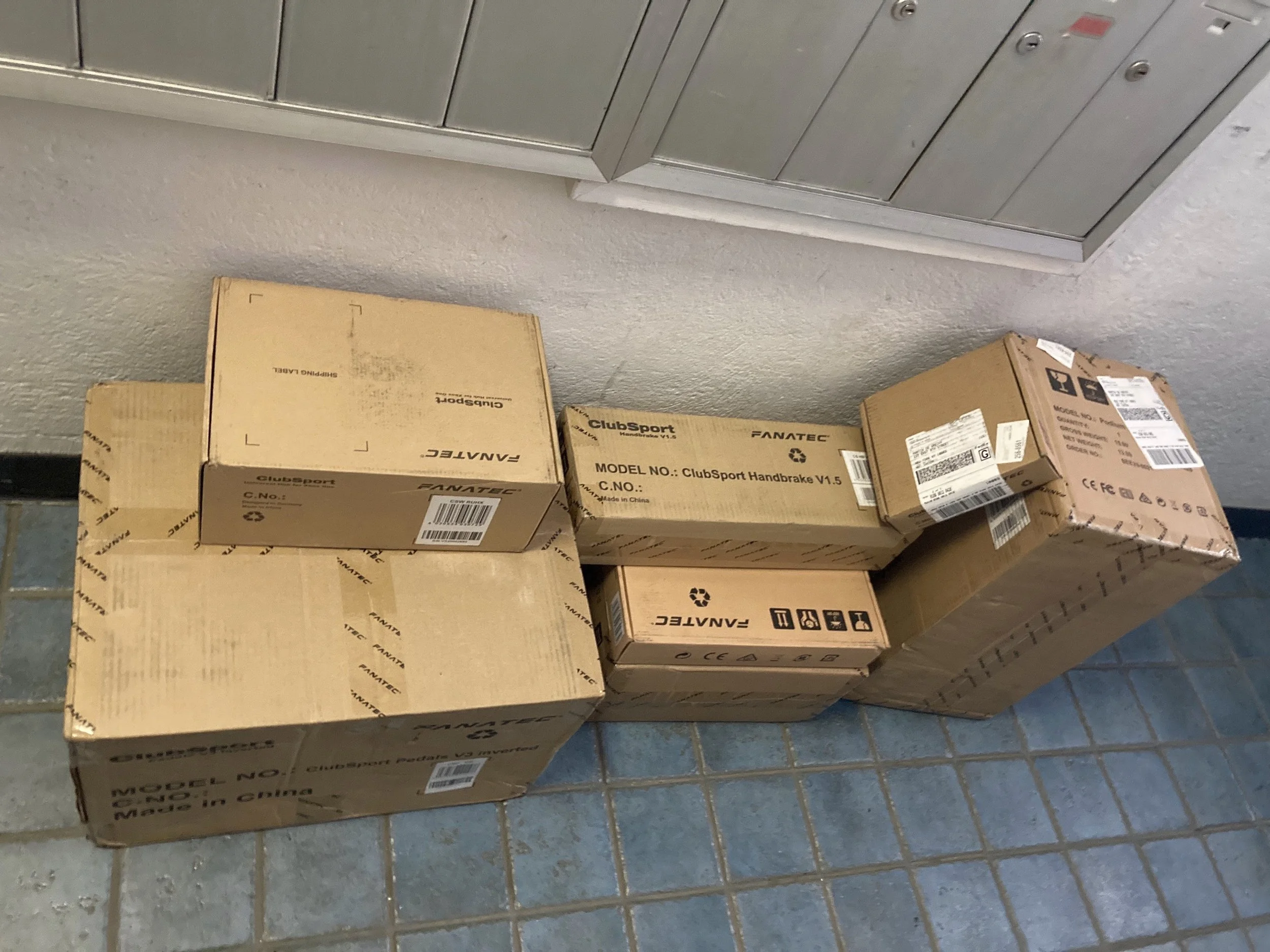
Yes, there is nothing better than receiving that glorious shipment of cool new sim gear that you’ve drained your bank account for.
I get it.
LESSON #4
think AHEAD,
and have patience
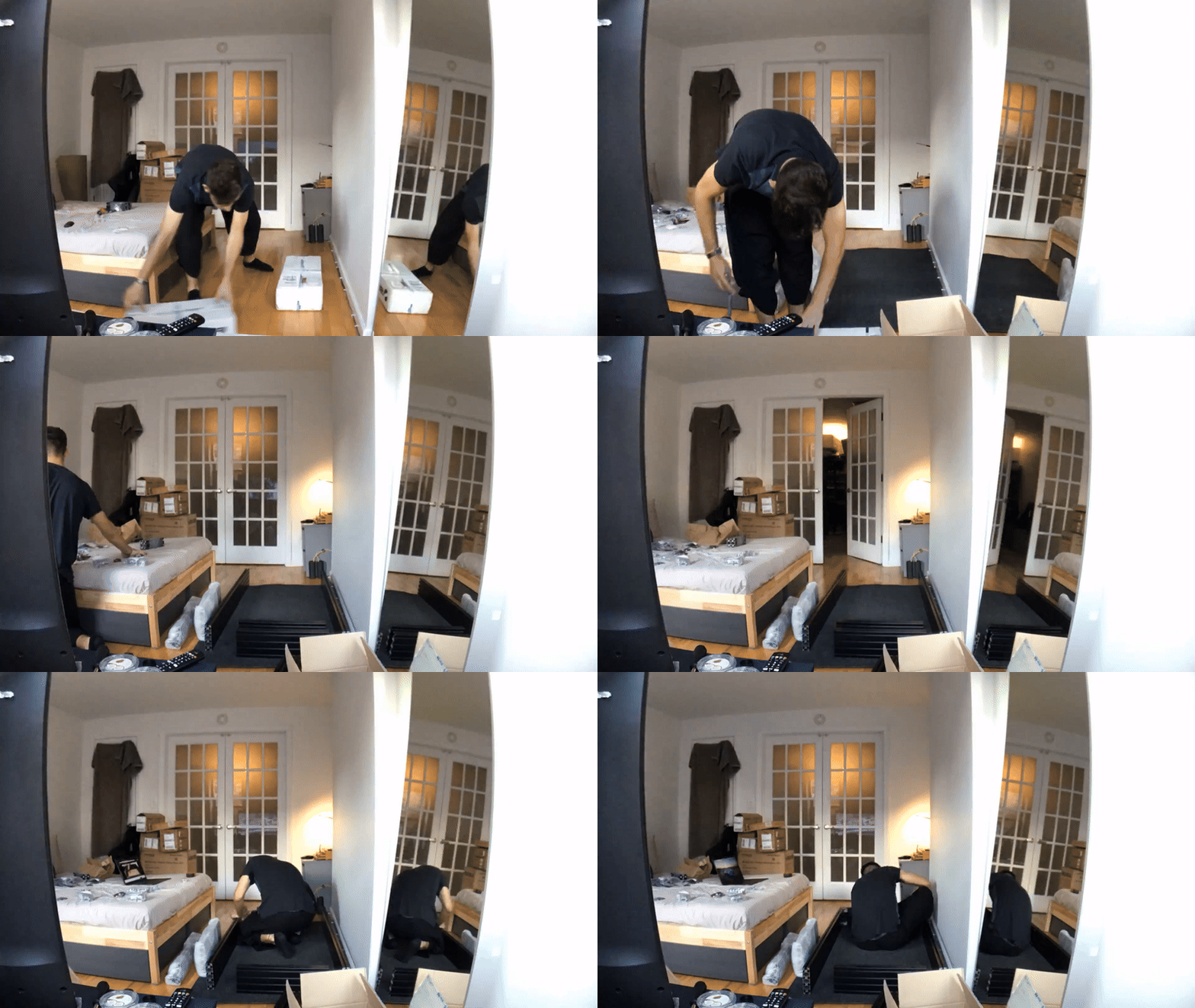
But it’s absolutely essential (for the sustainability of this hobby in your life) to think where you want to take this hobby. This is a picture of my first real direct drive setup (from Fanatec) that I spent more than three years planning waiting for the right moment to purchase
Start with the foundation and upgrade your way to heaven
I get asked a lot, “I want to get into sim racing – what wheel should I buy?”
That’s a great question, but it’s the wrong one to start. Provided you have all the factors that allow you to do so, it’s essential to start with the foundation: the cockpit
The cockpit is literally the skeleton that holds all of your driving components together. As you get into higher torque direct drive wheelbases, the amount of vibration coming through that base will be immense. Having a completely solid structure to hold everything together and absorb those vibrations will be a gain in lap times, I promise you.
Depending on what your goals are and how you look at it, sim racing can be taken as seriously as you want it to.
There are plenty of different angles for why you might want to get into sim racing: want to mess around in an open world environment, wanting that arcade experience but with a wheel and pedals, experiencing different disciplines of motorsports in the comfort of your own home, or want to compete at the highest level that you can.
But should never be forgotten: